|
LOVE TOUGH
 |
||
|
"Always
seek out the seed of triumph in every adversity." - Og Mandino
“In order
to succeed in life, you need to stay motivated in the lows and focuses in the
highs.”
|
||
|
Last week South Africa
saw the running of the Ultimate Human Race...Comrades Marathon 2013.
It's tough, but people love it.
South Africa plays host
to many such endurance events, with the Comrades, Iron Man, Two Oceans Ultra
Marathon, Otter Trail Run, Cape Epic Mountain Bike Race among the finest (and
toughest) endurance events “in the
world”– said in a Jeremy Clarkson Top Gear voice. There is, of course,
also the Cape Argus Pick&Pay Cycle Tour, a favourite event of many
people.
|
||
|
As fUSS, we have had a numerous people Sweat4(Good)2 in
aid of raising awareness and funds for our Lost&Found course, saddlingUP and lacingUP for these
various events. The months of
preparation, participation in ‘training’ events leading up to the main Race Day has highlighted two major characteristics
about these people:
* They show
commitment to seeing through their goal.
(especially
through the rough patches)
* They love
tough.
|
 |
|
|
In life we face daily tough situations. Heck, in
SA we even had a shoe for kids called 'Toughies'. The manufacturers obviously
knew SA needs a Bata-brand relevant to our conditions!
But what do
tough situations do for you?
Here are just three things
which, when you critically look at your own growth through your tough
situation, will help you to celebrate your own growth with resilience
to faceUP to your next challenging situation.
|
||
|
Tough situations…
|
||
|
1)
teach you discipline:
When facingUP to a due-date of an endurance event, there are many
early mornings sacrificed and many other aspects to ‘give up’ in order to
achieve the goal. However, when there
is a reason bigger than yourself, it makes this sacrifice worth it. In tough situation, those who come through
them with resilience will often tell you that they decided every day, to do
what is ‘necessary in order to
create the tomorrow they were committed to.’(Anthony Robbins)
|
||
|
Action
|
See
yourself beyond the darkness you find yourself in, this will help you to grow
through the experience.
|
|
|
2) refines
your focus:
‘When I know what I want
to achieve, I make decisions that are in line with that goal, and employ
actions that will support my effort to succeed. I don’t put unnecessary
pressure on myself, but I know what I want to achieve.’ – Bruce Fordyce, Legendary
Comrades Marathon Champion. During
tough times our capacity is restricted. We have limited emotional, physical, psychological
and spiritual strength during such times.
|
||
|
Action:
|
Have clear focus on what
you need to do in a given day and week.
Make lists and celebrate when you’ve done them. Athletes take great pleasure in penning
down their training log. Do the same
for your victories.
|
|
|
3) strengthen
relationships – with self and others:
Over a six to nine month
period, Comrades athletes (typically) run 1500km (930 miles) in training for
the 89km (56km) race. During this time, inevitably, you get to spend a lot of
time with yourself, leading to getting to know yourself very well. A solid bond is also established between
fellow athletes, leading to a sharing of lives and blossoming of relationships.
When tough situations
come knocking in your life, our inclination is often to ‘show people I can
get through this on my own’. Whilst independence
is not a bad thing, in tough times, true friendships (and sometimes new relationships)
are discovered, moulded, and tempered.
|
||
|
Action:
|
Make an effort to not
exclude people from your life when things are tough. It’s OK to ask for help
and assistance. King Solomon said: If one person falls, the other can reach out and
help. But people who are alone when they fall are in real trouble. A person
standing alone can be attacked and defeated, but two can stand back-to-back
and conquer. Three are even better, for a triple-braided cord is not easily
broken.
(Eccl. 4:9-12, NLT)
|
|
|
Whilst no one wishes for difficulty and struggles in their lives, it
will happen. However, if we learn to Love Tough, chances are
that you will rise with resilience as you grow through the situation.
If you currently find yourself down in the valley of despair, may
these words, the foundation of facingUP Support Services’ aim to support,
encourage and celebrate, is rooted in Psalm 34. May it prop you up and encourage you on
your journey:
Be brave. Be strong. Don’t give up.
(Psalm 34:10)
facingUP Support Services: * NPC: 2011/004081/08 * 18A Tax
Exempt Status (PBO) file no. 930/036/181
PO BOX 14, HOWARD PLACE, 7450 Fax: +27 (0)86 762 5024
Directors: Dr. SH Walsh, Mr. IS Smith, Mr. E Lombard
www.facingupsa.org
/ www.lostandfoundnow.org
(Image: threestarandsdesign.com)
|
||
Friday, 7 June 2013

Tuesday, 14 May 2013
|
** “Friends, Romans, countrymen,lend me your ears…”
Lend / Verb//
|
|||
“What’s the use of ears if you
don’t even plan to use them? I mean,
whenever I say something, they already have a solution, or a strategy or the usual
‘you-should-rather-have…’ reply ready.”
(15 year old girl, sharing her frustration of not being listened
to.)
Previously, we blogged about the value and positive changes that we
see when adults, in particular the Teachers, to whom facingUP Support Services (fUSS) deliver
our Emotional Awareness Training, start understanding the value of listening -
to each other, as well as to learners and their own kids.
|
||||
|
“In the
craziness of preparing dinner, knowing I’m going to be late for the Parents’
evening at school, my kids want to talk to me. Not chat, talk! But I know I’m not listening. So what am I doing?” asked a mother of
three during a training session. Well,
in those situations - and let’s be honest, we all face similar situations
daily - I think it’s safe to say you’re merely hearing.
Listening means
attentiveness, entwined with consideration, thoughtfulness and concentration. And that comes
through your posture as well as expressions. Hearing means you register
some noise, make some return-noises (or give stock-answers) in the
direction where the noise is coming from. My theory is this: Listening registers in the heart. Hearing
registers in the head.
 Many parents feel guilty for not listening
(for various reasons) to their children. Our encouragement at training sessions is often this:
It is normal to find that your ears are stuck in neutral, un-engaged
in the crazy-hour of the evening (or pre-school morning drill). And, as life would have it, this would normally be the time that
your beloved little rosy-cheeked ray of sunshine (or husband) would like to
tell you, in full detail, about the issue that all-consuming issue.
The only thing you want to bark is: “Go away”, “not now” or, the more polite
ones out there, “can’t you see I’m busy, please...?” But any of the afore mentioned
can deep-fry you in guilt…or worse, get the dreaded attitudinal-stare (pic left) Many parents feel guilty for not listening
(for various reasons) to their children. Our encouragement at training sessions is often this:
It is normal to find that your ears are stuck in neutral, un-engaged
in the crazy-hour of the evening (or pre-school morning drill). And, as life would have it, this would normally be the time that
your beloved little rosy-cheeked ray of sunshine (or husband) would like to
tell you, in full detail, about the issue that all-consuming issue.
The only thing you want to bark is: “Go away”, “not now” or, the more polite
ones out there, “can’t you see I’m busy, please...?” But any of the afore mentioned
can deep-fry you in guilt…or worse, get the dreaded attitudinal-stare (pic left)
Whilst some conversations (where ears are in gear) can happen during
the normal course of a day, sometimes we need to be able to listen with full
engagement. In the madness of daily
life, this is not always easy.
So, here’s an AAH
strategy you could try next time you find yourself stuck between
‘must-listen’ and ‘stuff-that-must-happen-I-can’t-listen-now’:
Acknowledge…
to your
precious one that you would love to listen to their story and not miss anything!
However, right now, with the slushing-sounds of the washing machine, the
nuclear drone of the microwave cooking the rice for din-din, and the onions
ruining your make-up, you’re concerned you might miss out on some of the
details of their story.
Ask…
if it would be
OK if you can listen to them later? Suggest that you can make the two of you
a hot chocolate later, and then they can tell you the whole story. Experience
will help you to determine whether this is the type of conversation that
would benefit all your attention right away. Be sure to evaluate the issue with sensitivity. If it's a 'have-it-now' chat, then do it.
Honour…
your
commitment to a later talk-time. Chances are that you still have a long list of stuff requiring your
attention. If you are really pressed
for time – honour your commitment of earlier – but feel free to tell the
person that you have 13 minutes, but would love to hear what they have to
say. (Reserve your answers/advice/sermon for a later stage. remember, most people will ask for advice or answers.)
In a survey we conducted, more than 80% of young people we work with indicated that the fact that they 'have been able to voice their issue to someone who cares for them, is a help' in itself. Therefore, we encourage you to take time to listen to them. Young people are in a formative stage of their lives, and benefit from 'bouncing' their opinions and learnings against a safe ear. Be sure to play nice.
Next time we'll look at some basic listening skills to help you make the most of your ear-engagement.
|
||||
|
** When we used this quatations then we ask someone
politely to listen to us very carefully or with full attention.It also used
when you want to speak directly to people about things that are important or
serious. It is basically request between the person who saying and who is
listening to think on a meaningful matter or discussion.
|
||||
|
Feel free to contact us via our websites.
Please note: Pictures used enjoy copyright as property of facingUP Support Services
|
||||


Tuesday, 23 April 2013
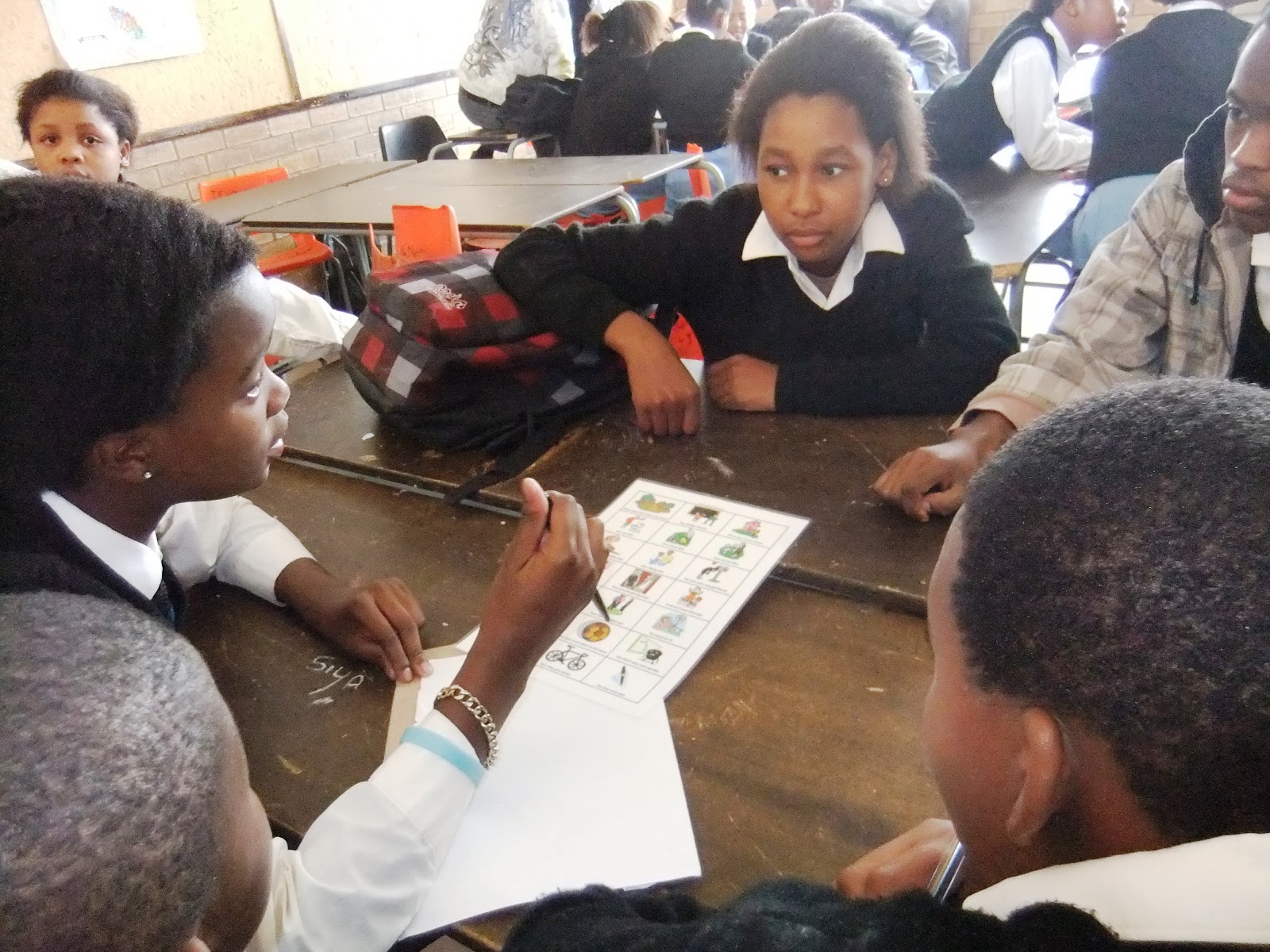 |
| Learners sharing stories |
JBay - It is natural to associate a place like Jeffreys Bay as a laid-back holiday town. The waves are plentiful; people relaxed...a small community closely knit in peaceful bliss.
Sadly though, as we have many times (re)discovered: Loss and life-changing events does not discriminate when it comes to financial status, location, religion or race. Loss affects us all - at some stage in our lives.
It is for this very reason that we as facingUP Support Services - fUSS for short - make a fUSS about equipping our young people and those who spend the most time with them, the teachers, with knowledge and skills to not only cope when facing a life-changing event, but also support and enable them to grow stronger and more resilient through the process.
 |
| Educators during EAT Session |
During the past three weeks of presenting Emotional Awareness Training (EAT) sessions with Educators in various schools in the Eastern Cape, we have realised that Educators who are (still) struggling to terms with negative life-changing events in their own lives, often find it very difficult to relate to learners who might have a similar loss in their lives. "Whenever Justin is sad in class, I know it is because of his mother who is no longer there. But what do I say to him? I'm still trying to figure out how I'm feeling..." said an Educator who recently loss her mother.
In most cases, we have found that, when assisting young people through the process of growing through a challenging time in their lives, it's not as much a matter of "knowing what to say", but rather knowing how to listen. If you can 'hear' the pain in the story someone is telling you, then your response to that emotion will be a natural, genuine response. 'Giving advice' might feel like the right thing to do, however, the best thing to do is to listen and think how you would have felt in that situation. Should you feel that you can share a little bit of encouragement from your own life and own journey through a similar experience, then share your encouragement for their journey, by celebrating your own growth.
If you are currently in a position of supporting someone who is going through a challenging time in their life and would like some help as you are going through that process with them, feel free to make contact with fUSS. Through our range of partnerships in South Africa, as well as our relationship with This Way Up Youth Project (UK) we'd be happy to help!

Subscribe to:
Posts (Atom)